
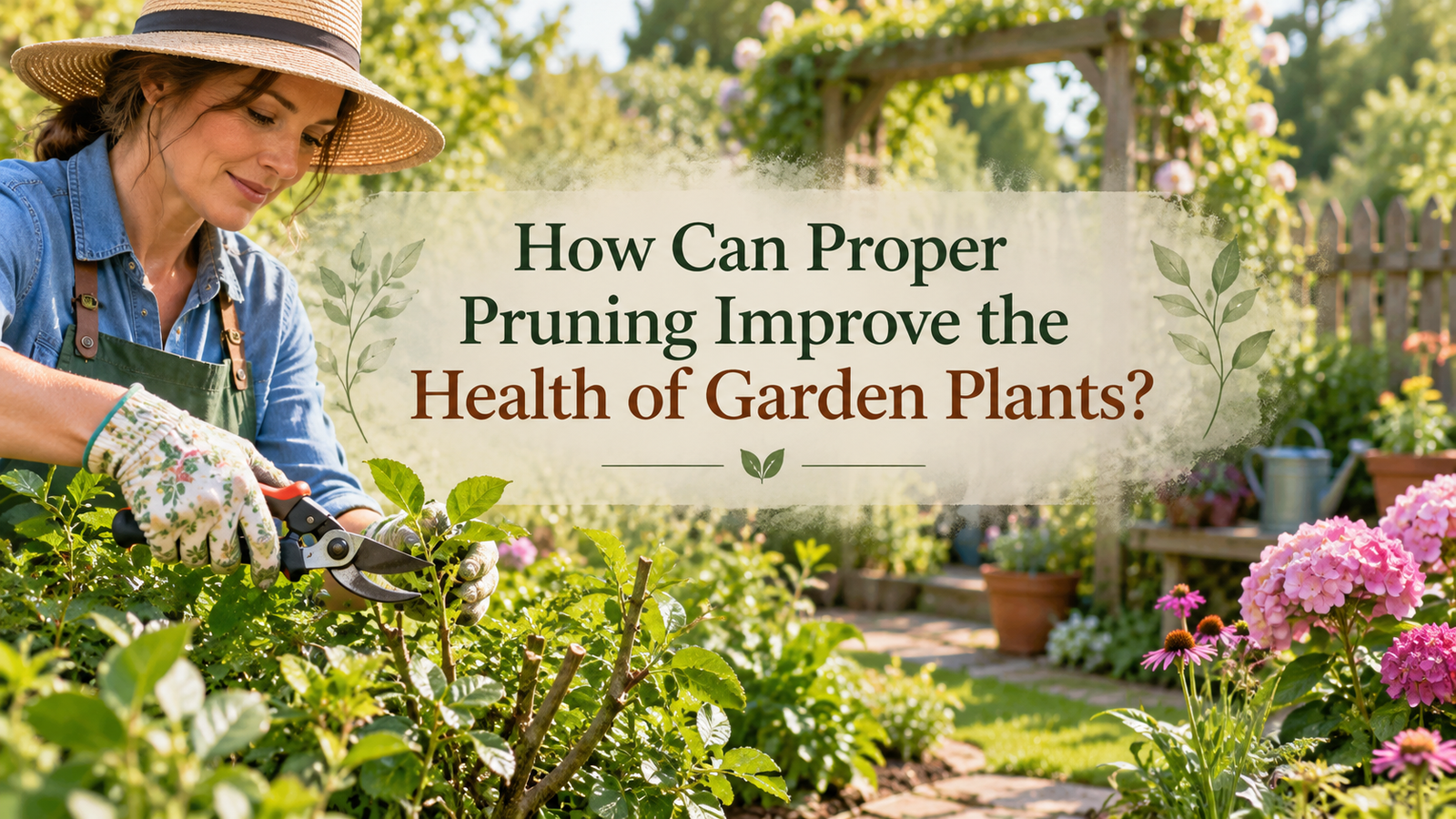
A healthy garden requires more than regular watering, sunlight, and fertile soil. Plants also need proper care to maintain their shape, encourage fresh growth, and protect themselves from common problems. One of the most useful gardening practices is pruning. Understanding how proper pruning improves the health of garden plants can help gardeners grow stronger flowers, healthier shrubs, and more productive fruit trees.
Pruning is the process of carefully removing selected branches, stems, leaves, or other plant parts. The purpose is not simply to make plants look attractive. Proper pruning helps manage plant growth, removes unhealthy branches, improves air circulation, and allows sunlight to reach different parts of the plant.
Many beginners hesitate to prune because they worry about damaging their plants. However, when pruning is performed correctly and at the appropriate time, it can improve plant health and support natural growth. Different plants have different pruning requirements, so learning the basic methods is an important part of successful gardening.
What Is Pruning in Gardening?
Pruning is a gardening technique used to remove unnecessary, damaged, diseased, or poorly positioned plant growth. Gardeners use pruning tools to cut selected parts of a plant while preserving its healthy structure.
Plants naturally produce branches and leaves as they grow. Sometimes, branches become crowded, cross each other, or grow in directions that interfere with healthy development. Certain branches may also become weak because of disease, insect damage, or unfavorable weather.
Removing these unwanted parts helps gardeners maintain a balanced plant structure.
Pruning is commonly practiced on roses, fruit trees, ornamental shrubs, climbing plants, and flowering bushes. Some vegetables and herbs may also benefit from selective pruning.
However, pruning does not benefit every plant in the same way. Some plants require regular trimming, while others grow better with very little intervention.
Understanding the natural growth pattern of each plant is essential before making any cuts.
Why Is Proper Pruning Important for Plant Health?
Proper pruning supports several important functions within a plant. It allows gardeners to remove unhealthy growth while improving the growing conditions around the remaining branches.
A plant with too many crowded branches may struggle to receive adequate sunlight and fresh air throughout its canopy. Dense foliage can also create humid conditions that encourage certain fungal diseases.
By selectively removing unnecessary branches, gardeners can improve the overall environment around the plant.
Pruning also helps maintain structural strength. Weak or damaged branches may break during strong winds or heavy rainfall. Removing these branches reduces the chance of additional damage.
Another important benefit is growth management. Plants can be guided into suitable shapes without allowing branches to spread into pathways, walls, or nearby plants.
Healthy pruning practices encourage balanced development and help plants use their available resources effectively.
How Does Pruning Encourage Healthy New Growth?
One of the most noticeable benefits of proper pruning is the development of healthy new shoots.
Many plants respond to pruning by producing fresh growth near the cutting area. This happens because removing certain growing tips can change the way plant hormones influence nearby buds.
For example, trimming the growing tip of some shrubs encourages side branches to develop. This can make the plant appear fuller and more compact.
Gardeners often use this technique to maintain bushy ornamental plants.
However, not every pruning cut produces the same result. The response depends on the plant species, its age, growing season, and overall condition.
Excessive pruning can weaken a plant by removing too many leaves that produce energy through photosynthesis.
The best approach is to remove only the growth that needs attention while preserving enough healthy foliage for normal development.
How Can Pruning Improve Air Circulation?
Good air circulation is important for maintaining a healthy garden.
When branches grow too close together, air movement becomes restricted. Moisture may remain on leaves for longer periods, especially after rainfall or watering.
These conditions can encourage certain fungal diseases.
Proper pruning helps create space between crowded branches so that air can move more freely through the plant.
This is particularly useful for roses, fruit trees, and dense ornamental shrubs.
For example, removing inward growing branches from a rose bush can improve ventilation around its center.
Better airflow may help leaves dry more quickly after becoming wet.
Gardeners should still avoid removing too many branches. The aim is to create a balanced structure rather than leaving the plant excessively exposed.
Combining suitable pruning with proper watering and plant spacing creates better conditions for healthy growth.
How Does Pruning Improve Sunlight Exposure?
Sunlight is essential because plants use light energy to produce food through photosynthesis.
When upper branches become too dense, they may prevent sunlight from reaching lower leaves and inner branches.
This uneven light distribution can affect plant growth.
Selective pruning allows more sunlight to enter the canopy. It can support the development of leaves, flowers, and fruit in areas that previously received limited light.
Fruit trees particularly benefit from well planned canopy management.
For example, an apple tree with crowded branches may produce fruit mainly on its outer sections. Proper pruning can improve light penetration into suitable parts of the canopy.
However, suddenly exposing previously shaded branches to intense sunlight can sometimes cause damage, especially in hot climates.
Gradual pruning is often safer than removing large amounts of foliage at once.
The goal is to provide balanced sunlight without disturbing the plant’s natural protection.
Can Pruning Help Prevent Plant Diseases?
Pruning can play an important role in reducing certain plant health problems.
Diseased branches may contain infected tissues that allow some pathogens to spread within the plant or to nearby plants.
Removing affected branches can help limit certain infections when the disease and correct pruning method are identified.
Dead branches should also be removed because they may provide suitable places for some pests and decay organisms.
Gardeners should examine their plants regularly for unusual signs, including discolored branches, dying shoots, damaged bark, or suspicious growth.
When disease is suspected, it is important to identify the problem before pruning. Not every leaf spot or damaged stem requires immediate removal.
Pruning tools should be cleaned regularly and disinfected when moving between infected plants or branches.
Diseased plant material should be disposed of according to the type of infection. Some infected material should not be placed in ordinary home compost.
Although pruning cannot prevent every disease, it can form an important part of responsible garden maintenance.
How Does Pruning Support Better Flower Production?
Flowering plants often benefit from carefully timed pruning.
Some flowering shrubs produce blossoms on new growth, while others flower on branches formed during the previous growing season.
This difference explains why pruning time is so important.
For example, many spring flowering shrubs develop flower buds before winter. Cutting their branches during late winter may remove buds that would otherwise bloom in spring.
These plants are often pruned shortly after flowering.
Other plants produce flowers on new seasonal growth and may benefit from pruning during dormancy.
Removing faded flowers, a practice known as deadheading, can also encourage repeat flowering in certain plants.
Roses are a familiar example, although pruning methods vary according to the rose variety and local climate.
Learning when a plant develops its flower buds helps gardeners encourage blossoms without accidentally removing future flowers.
Can Proper Pruning Improve Fruit Production?
Fruit trees require careful attention because pruning influences branch structure, sunlight exposure, and fruit development.
A fruit tree with excessive growth may develop a crowded canopy. Some branches may receive insufficient light, while weak branches may struggle to support heavy fruit.
Proper pruning helps establish a strong framework that can support future harvests.
It also makes certain maintenance activities easier, including fruit inspection, harvesting, and pest monitoring.
Young fruit trees often need formative pruning to develop well positioned main branches.
Mature trees may require maintenance pruning to remove damaged growth and manage canopy density.
However, removing too much productive wood can reduce the harvest. Severe pruning may also stimulate excessive leafy growth instead of fruit production.
For this reason, gardeners should learn the pruning needs of each fruit species.
Apple, peach, citrus, and guava trees do not all respond to pruning in the same way.
What Is the Best Time to Prune Garden Plants?
The best pruning time depends on the plant species, climate, and purpose of pruning.
Many deciduous trees are pruned during their dormant season because their branch structure is easier to observe when leaves are absent.
However, some species are vulnerable to particular diseases or other problems when pruned at certain times.
Spring flowering shrubs are generally pruned after their blooming period if pruning is needed.
Summer flowering shrubs that bloom on new growth may tolerate pruning before the growing season begins.
Evergreen plants often have different maintenance requirements depending on their natural growth habits.
Light removal of dead or damaged branches may be possible at various times, provided the plant is not exposed to additional risks.
Gardeners should avoid unnecessary heavy pruning during extreme heat, severe drought, or other stressful conditions.
Observing seasonal growth patterns and checking species specific recommendations can help determine the safest pruning period.
What Tools Are Needed for Proper Pruning?
Using suitable gardening tools makes pruning more accurate and reduces unnecessary plant damage.
Different tools are designed for different branch sizes.
Hand pruning shears are useful for cutting small stems and thin branches. Bypass pruners generally provide clean cuts on living stems.
Loppers are suitable for branches that are too thick for ordinary hand pruners.
A pruning saw is often necessary for larger woody branches.
Hedge shears are commonly used for shaping hedges, although they are not suitable for every type of plant.
Tools should be sharp, clean, and comfortable to handle.
Dull blades may crush plant tissue or produce uneven cuts, increasing the chance of damage.
Gardeners should also wear suitable gloves and eye protection when necessary.
Large branches, tall trees, and work near electrical lines should be handled by qualified professionals rather than attempted with ordinary household gardening equipment.
How Can Beginners Prune Plants Correctly?
Beginners can achieve good results by following a careful and simple approach.
Start by examining the entire plant. Look for dead branches, damaged stems, crossing growth, and crowded sections.
Identify the branches that actually need removal before making any cuts.
For small branches, make clean cuts in suitable locations near a bud or branch junction.
When removing a branch from a tree, preserve the branch collar, the slightly swollen area where the branch joins a larger limb or trunk.
Avoid cutting flush against the trunk or leaving unnecessarily long stubs.
For larger branches, proper cutting techniques are needed to prevent bark tearing.
Remove a small amount of growth at a time and step back to examine the plant’s appearance.
This helps prevent unnecessary overpruning.
The amount of foliage that can safely be removed depends on the plant’s species, age, condition, and season.
Gardeners should prioritize plant health rather than trying to achieve a perfect shape immediately.
What Common Pruning Mistakes Should Be Avoided?
One common mistake is removing too many healthy branches at once.
Severe pruning can reduce the plant’s ability to produce food and may cause unnecessary stress.
Another mistake is pruning at the wrong time of year. This can remove developing flower buds or expose sensitive plants to unfavorable weather.
Using dirty or blunt tools is also a problem. Poor cutting techniques may damage bark and increase the risk of infection.
Some gardeners trim every plant into the same rounded shape without considering natural growth habits.
This may create an attractive appearance temporarily but can interfere with flowering or produce dense outer foliage.
Tree topping, which involves cutting back major branches indiscriminately, should also be avoided because it can damage tree structure and encourage weak regrowth.
The most effective pruning method respects the natural structure and growth requirements of the plant.
How Does Pruning Help Maintain Plant Shape and Strength?
Pruning is not only about appearance. It can improve the physical structure of trees and shrubs.
Young trees often benefit from careful structural pruning that encourages well spaced branches and a stable main framework.
Branches that cross or rub against each other may create wounds over time.
Removing or redirecting one of these branches can help prevent further damage.
For shrubs, selective pruning controls unnecessary spreading while maintaining their natural form.
Climbing plants may also require pruning to prevent overcrowding and support growth along suitable structures.
A well maintained plant is generally easier to inspect and manage.
Good structure becomes particularly important as plants mature and their branches become heavier.
Does Every Garden Plant Need Regular Pruning?
Not every garden plant requires frequent pruning.
Some slow growing ornamental plants maintain their natural shape with minimal attention.
Certain flowering plants may only need occasional removal of dead flowers or damaged stems.
Herbs such as basil can benefit from regular pinching because it encourages branching and delays flowering under suitable conditions.
Other herbs, including rosemary and lavender, require more careful pruning because cutting deeply into old woody growth may prevent successful regrowth.
Vegetable plants also have different requirements.
For example, some tomato varieties can be trained and selectively pruned, while others produce better results with limited pruning.
Gardeners should avoid following one pruning method for every plant.
Understanding the individual needs of each species is more effective than establishing an unnecessary cutting schedule.
How Should Garden Plants Be Cared for After Pruning?
Proper aftercare helps plants continue growing normally after pruning.
The first step is to monitor soil moisture and provide water according to the plant’s actual needs.
Pruning does not automatically mean that extra watering is required.
Gardeners should also avoid applying excessive fertilizer immediately after pruning, especially when plants are stressed.
Healthy soil, appropriate sunlight, and suitable growing conditions are usually more important than additional fertilizer.
Fresh pruning wounds generally do not require commercial wound paint or sealing products. Most healthy trees can form their own protective tissues around properly made cuts.
Plants should be observed for unusual wilting, discoloration, or signs of infection.
Keeping the surrounding garden area clean and removing diseased debris can also support better maintenance.
With suitable care, many plants recover naturally and continue developing healthy branches.
Frequently Asked Questions About Proper Plant Pruning
Does pruning make plants grow faster?
Pruning can encourage new shoots in some plants by changing growth patterns. However, it does not always increase overall growth. Excessive pruning may actually slow development because it removes healthy leaves.
Can pruning save a dying plant?
Pruning may help when a plant has dead, damaged, or certain diseased branches. However, it cannot correct every underlying problem. Poor drainage, root diseases, insufficient sunlight, and severe water stress may require other solutions.
Should plants be pruned every month?
Most garden plants do not need monthly pruning. The correct frequency depends on the plant species, growth rate, season, and gardening goals.
Is it safe to prune plants during summer?
Light pruning may be appropriate for some plants during summer. However, heavy pruning during extreme heat can increase stress and expose previously shaded tissues to intense sunlight.
Why do plants produce new branches after pruning?
Removing a growing tip can reduce its influence over nearby buds. This allows certain buds to develop into new shoots. The response varies among plant species.
Conclusion
Proper pruning is an important practice for maintaining healthy and attractive garden plants. It helps remove dead and damaged growth, improves air circulation, increases sunlight penetration, and supports better branch structure.
Carefully timed pruning can also improve flowering, support fruit production, and make garden plants easier to maintain.
However, successful pruning requires more than simply cutting unwanted branches. Gardeners must understand the natural growth habits of their plants, choose the right tools, and avoid removing excessive healthy foliage.
Every plant has different requirements, so observing its condition and learning its seasonal growth pattern are essential.
By practicing proper pruning techniques, gardeners can create a healthier growing environment and maintain stronger plants throughout the year. A thoughtful approach to pruning, combined with good soil management, suitable watering, and regular inspection, can make a meaningful difference in the long term health of any home garden.


