Electricity is an essential part of modern life. We use it every day for lighting, cooking, cooling, heating, cleaning, and operating household appliances. While electricity makes our lives more comfortable, excessive consumption can increase monthly expenses and place additional pressure on energy resources. Learning how to reduce household electricity consumption is an effective way to save money, improve energy efficiency, and create a more environmentally friendly home.
Many homeowners believe that reducing electricity consumption requires expensive equipment or major changes to their homes. However, small improvements in daily habits can make a noticeable difference. Switching off unnecessary lights, choosing efficient appliances, and managing cooling systems properly are simple steps that can help control energy usage.
Understanding where electricity is consumed and making thoughtful decisions can help families reduce unnecessary expenses without sacrificing comfort. This article explains practical ways to reduce electricity consumption at home and develop energy saving habits that can provide long term benefits.
Understand Your Household Electricity Consumption
The first step toward saving electricity is understanding how energy is used throughout your home. Different appliances consume different amounts of electricity depending on their power requirements and operating hours.
Air conditioners, electric heaters, refrigerators, water heaters, and washing machines can contribute significantly to household electricity consumption. Lighting, televisions, computers, and smaller electronic devices also add to monthly electricity bills.
Reviewing previous electricity bills can help identify changes in energy consumption. If electricity usage increases during summer, cooling equipment may be responsible. Similarly, higher winter bills may result from electric heating appliances.
You can also check appliance labels to understand their power ratings. Electricity consumption is generally measured in kilowatt hours, which represent the amount of energy used over time.
Understanding these details helps homeowners identify opportunities to reduce unnecessary energy usage.
Switch Off Lights When They Are Not Needed
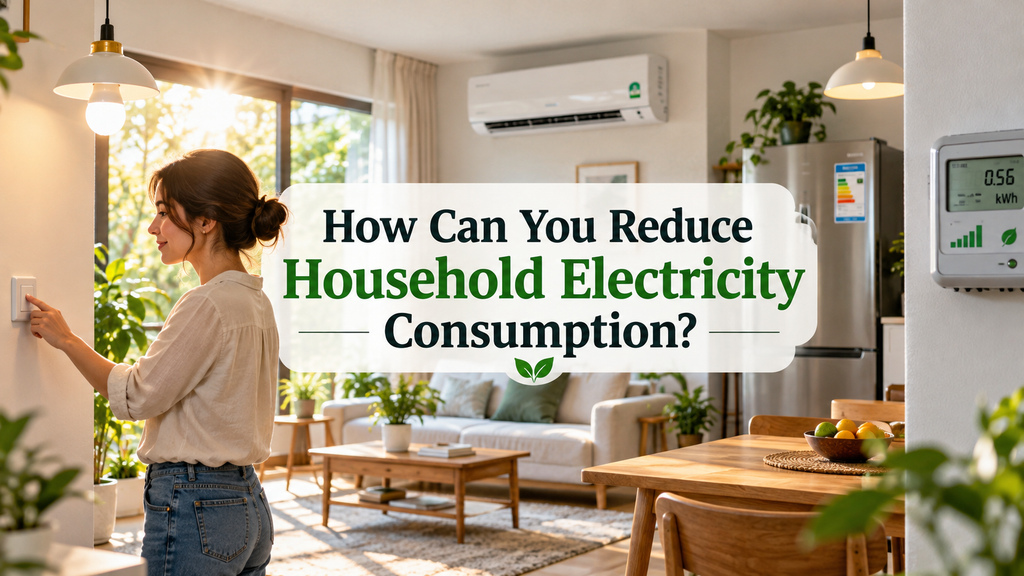
One of the easiest ways to reduce household electricity consumption is switching off lights in empty rooms.
Many people leave lights running in bedrooms, kitchens, bathrooms, and hallways even when nobody is using those spaces. Although individual lights may consume relatively little electricity, unnecessary operating hours can increase overall energy consumption.
Develop a habit of switching off lights whenever you leave a room. Encourage family members, especially children, to follow the same practice.
During daytime, open curtains and windows to allow natural light into your home. Properly positioned furniture and lighter wall colors can also help distribute daylight throughout a room.
Using natural light reduces the need for artificial lighting and creates a more pleasant indoor environment.
Replace Traditional Bulbs With LED Lighting
Lighting technology has improved significantly, making it easier to save electricity without reducing brightness.
Traditional incandescent bulbs consume more electricity because much of their energy is converted into heat rather than visible light. LED bulbs provide similar brightness while using considerably less electricity.
For example, an LED bulb consuming approximately 9 watts can often replace a traditional 60 watt incandescent bulb, depending on brightness and design.
LED lights also generally last longer, reducing the need for frequent replacements.
When choosing LED bulbs, consider brightness, color temperature, and energy efficiency. Warm lighting may work well in bedrooms, while brighter lighting is often suitable for kitchens and study areas.
Replacing frequently used traditional bulbs with LED lighting is a practical investment in household energy efficiency.
Use Air Conditioners More Efficiently
Air conditioning is a major source of electricity consumption in many homes, particularly during hot weather.
Running an air conditioner continuously at very low temperatures can increase electricity usage significantly. A more efficient approach is selecting a comfortable temperature and avoiding unnecessary cooling.
For many households, setting the air conditioner around 25 to 26 degrees Celsius can be a reasonable starting point, although the ideal setting depends on climate, humidity, and personal comfort.
Keep doors and windows closed while the air conditioner is operating. This prevents cooled air from escaping and reduces the cooling load.
Clean air conditioner filters regularly because blocked filters can restrict airflow and reduce system performance.
Curtains, window shades, and proper insulation can also reduce indoor heat gain.
Using ceiling fans together with air conditioning may allow you to select a higher thermostat setting while maintaining comfort.
These practices can help reduce electricity consumption without making indoor spaces uncomfortable.
Improve Refrigerator Energy Efficiency
Refrigerators operate throughout the day, making their energy efficiency important for managing household electricity consumption.
One common mistake is opening the refrigerator door repeatedly or leaving it open while deciding what to take out.
Every time the door opens, warm air enters the refrigerator, increasing the cooling work required.
Try to organize food items so they are easy to locate. Avoid placing hot food directly inside the refrigerator because it introduces additional heat.
Check refrigerator door seals to ensure they close properly. Damaged seals allow cold air to escape, increasing energy consumption.
Maintain suitable temperature settings. A refrigerator temperature around 3 to 4 degrees Celsius and a freezer temperature around minus 18 degrees Celsius are commonly recommended for safe food storage.
Keep sufficient ventilation around the appliance according to the manufacturer’s instructions.
Regular maintenance can help your refrigerator operate efficiently and reliably.
Unplug Unused Electronic Devices
Some electronic devices continue consuming electricity even when they appear to be switched off.
This is commonly known as standby power consumption.
Televisions, gaming consoles, chargers, computer accessories, and entertainment systems may draw small amounts of electricity while connected to power.
Although standby consumption varies between devices, several appliances operating continuously can contribute to unnecessary electricity usage.
Unplug chargers when they are not needed and switch off entertainment equipment when it is not being used.
Power strips with switches can make this process easier by allowing multiple devices to be disconnected together.
However, avoid disconnecting appliances that require continuous operation, such as refrigerators or essential security equipment.
Reducing unnecessary standby power is a simple way to improve household electricity efficiency.
Choose Energy Efficient Household Appliances
Appliance selection can have a lasting effect on electricity consumption.
When purchasing a refrigerator, washing machine, air conditioner, or other major appliance, compare energy efficiency information instead of focusing only on the purchase price.
Energy efficient appliances are designed to deliver their intended performance while consuming less electricity under comparable conditions.
Although some efficient models may cost more initially, their lower operating expenses can provide savings over time.
Look for recognized energy efficiency labels and compare estimated annual electricity consumption where available.
It is also important to choose appliances that match your household requirements.
For example, purchasing an unnecessarily large refrigerator may increase electricity consumption without providing meaningful benefits.
Selecting the correct appliance size and efficiency level can improve long term household energy management.
Make Better Use of Washing Machines
Washing machines are convenient household appliances, but their electricity consumption depends on how frequently and how efficiently they are used.
Running a washing machine for only a few clothing items can waste both electricity and water.
Whenever practical, wash suitable full loads without exceeding the manufacturer’s recommended capacity.
Choose the appropriate washing program for the type of clothing and level of dirt.
Washing clothes with cold water can reduce electricity consumption when the machine would otherwise use electricity to heat water.
Avoid unnecessary extra washing cycles and keep the appliance clean according to its maintenance instructions.
If you use an electric clothes dryer, consider air drying clothes when weather conditions permit.
These simple habits can reduce household energy consumption while maintaining effective cleaning results.
Reduce Electricity Consumption in the Kitchen
The kitchen contains several appliances that can increase electricity usage, including electric ovens, microwaves, kettles, induction cooktops, and dishwashers.
Using kitchen equipment efficiently can help reduce energy waste.
When cooking, choose pots and pans that match the size of the heating surface. Use lids when suitable because covered cookware can retain heat and reduce cooking time.
Avoid repeatedly opening the oven door while food is cooking. Each opening allows heat to escape and may increase cooking time.
For small portions, a microwave may consume less electricity than heating a large conventional oven, depending on the food and cooking method.
Boil only the amount of water needed when using an electric kettle.
If you use a dishwasher, follow its recommended loading instructions and choose an efficient washing program when appropriate.
Thoughtful kitchen habits can help control electricity expenses without affecting meal preparation.
Improve Natural Ventilation and Home Insulation
The design and condition of your home can influence the amount of electricity required for cooling and heating.
Poor insulation allows unwanted heat transfer through walls, roofs, windows, and doors. This can make indoor temperatures more difficult to maintain.
Sealing gaps around windows and doors can reduce unwanted air leakage.
During hot weather, curtains, blinds, and exterior shading can help prevent direct sunlight from heating indoor spaces.
Roof insulation may also reduce heat entering rooms beneath the roof.
Natural ventilation can improve comfort when outdoor temperatures and air quality are suitable.
Opening windows during cooler hours may reduce the need for mechanical cooling. However, windows should remain closed when outdoor air is hotter or more humid than indoor air if air conditioning is operating.
Improving your home’s thermal performance can reduce the workload on cooling and heating equipment.
Use Ceiling Fans Wisely
Ceiling fans generally consume less electricity than air conditioners, making them useful for improving comfort in suitable weather.
Fans create air movement that helps people feel cooler through increased evaporation from the skin.
During moderately warm weather, using a fan may provide sufficient comfort without air conditioning.
When air conditioning is necessary, a fan can help occupants remain comfortable at a higher thermostat setting.
However, fans do not significantly lower the actual room temperature.
Switch off fans when nobody is present because their primary benefit comes from air movement around people.
Regularly clean fan blades and ensure the fan is operating correctly.
Using fans appropriately can support an effective household cooling strategy.
Manage Electric Water Heating Carefully
Electric water heaters can consume substantial electricity, particularly in households with frequent hot water requirements.
Heating more water than necessary or maintaining an unnecessarily high temperature can increase electricity usage.
Set your water heater according to the manufacturer’s recommendations, balancing energy efficiency with safe water temperatures.
Fix leaking hot water taps because continuous leakage wastes both water and heating energy.
Insulating suitable hot water pipes can reduce heat loss.
For storage water heaters, consider appropriate operating schedules based on household needs and the manufacturer’s guidance.
Shorter showers and water efficient fixtures can also reduce hot water demand.
These measures can help control the electricity required for water heating.
Take Advantage of Natural Daylight
Natural daylight is a valuable resource that can reduce dependence on electric lighting.
Arrange study tables, reading chairs, and workspaces near windows where sufficient daylight is available.
Use light colored curtains that allow daylight to enter while maintaining privacy.
Keep windows clean because dust and dirt can reduce the amount of light entering a room.
Mirrors and light colored interior surfaces can help distribute available daylight.
During sunny hours, consider completing tasks that require good lighting near naturally illuminated areas.
Using daylight thoughtfully improves indoor brightness while reducing unnecessary electricity consumption.
Monitor Electricity Usage Regularly
Monitoring household electricity consumption helps determine whether energy saving efforts are producing results.
Compare monthly electricity bills and note changes in kilowatt hour consumption rather than looking only at the total amount payable.
Electricity prices, taxes, and billing structures can change, so the bill amount alone may not accurately reflect your energy saving progress.
Smart electricity meters and suitable energy monitoring plugs can provide more detailed information about appliance consumption.
You can also calculate approximate electricity usage using an appliance’s wattage and operating hours.
For example, a 100 watt appliance running for 10 hours consumes approximately one kilowatt hour of electricity.
Tracking appliance usage helps identify equipment that consumes unnecessary energy.
Regular monitoring also encourages households to maintain consistent energy saving habits.
Involve Every Family Member in Saving Electricity
Reducing household electricity consumption becomes easier when everyone participates.
One person cannot always monitor every light, fan, appliance, and electronic device in a busy household.
Discuss simple electricity saving practices with family members and explain why they matter.
Children can learn to switch off lights after leaving rooms, while adults can focus on efficient appliance operation and maintenance.
Create simple household routines, such as checking unnecessary lights and devices before bedtime.
Avoid making energy saving feel like a difficult responsibility. Instead, encourage small actions that naturally become part of daily life.
When everyone contributes, the combined effort can produce meaningful improvements in energy efficiency.
Maintain Electrical Appliances Regularly
Regular appliance maintenance plays an important role in efficient electricity usage.
Dust, damaged components, blocked filters, and poor ventilation can affect appliance performance.
Clean air conditioner filters, refrigerator coils where accessible and recommended, and other appliance components according to the manufacturer’s instructions.
Watch for unusual sounds, excessive heating, or reduced performance.
Do not attempt electrical repairs without appropriate knowledge or training.
A qualified technician can inspect appliances that appear faulty or consume unusually high amounts of electricity.
Proper maintenance may improve efficiency, extend equipment life, and help prevent avoidable breakdowns.
Consider Solar Energy for Long Term Savings
Solar energy can be another option for households seeking to reduce electricity purchased from the grid.
Solar panels generate electricity from sunlight and may help offset daytime household energy consumption.
However, the financial benefits depend on installation costs, available sunlight, system size, electricity tariffs, maintenance, and applicable grid connection rules.
Before investing, evaluate your household’s electricity requirements and roof suitability.
Consult a qualified solar installer to understand the expected electricity generation and financial payback.
Solar power is not necessary for every home, and reducing unnecessary electricity consumption should remain an important first step.
Combining efficient appliances, responsible energy habits, and suitable renewable energy solutions can improve long term household energy management.
Common Mistakes That Increase Household Electricity Bills
Some everyday habits can increase electricity consumption without being immediately noticeable.
Leaving an air conditioner running in an empty room is one example. Another is operating electric heaters while doors or windows remain open.
Using old, inefficient appliances for extended periods may also increase energy consumption.
Other common mistakes include overusing artificial lighting during daytime, running partially loaded washing machines too frequently, and keeping unnecessary electronic devices connected continuously.
Ignoring damaged refrigerator seals or dirty air conditioner filters can make appliances work harder than necessary.
Identifying these mistakes is an important part of learning how to save electricity at home.
Small corrections often require little effort and can contribute to lower monthly electricity consumption.
Frequently Asked Questions
What Is the Easiest Way to Reduce Electricity Consumption at Home?
The easiest starting point is switching off unnecessary lights, fans, and appliances. Replacing frequently used traditional bulbs with LED lighting and improving air conditioner settings can also help reduce electricity consumption.
Which Household Appliances Consume the Most Electricity?
Air conditioners, electric heaters, water heaters, refrigerators, and clothes dryers can be major electricity consumers. Actual consumption depends on appliance efficiency, power rating, and operating hours.
Does Unplugging Appliances Save Electricity?
Yes, unplugging devices that consume standby power can save electricity. The amount saved depends on the number and type of devices connected.
Can Ceiling Fans Help Reduce Electricity Bills?
Yes, ceiling fans may reduce the need for air conditioning during suitable weather. They can also improve comfort when an air conditioner is set at a higher temperature.
How Can I Lower My Electricity Bill During Summer?
Use air conditioning efficiently, clean cooling filters, close curtains during strong sunlight, improve ventilation when outdoor conditions are suitable, and reduce unnecessary appliance usage.
Conclusion
Reducing household electricity consumption does not always require expensive improvements or major lifestyle changes. Small daily decisions can make a meaningful difference when practiced consistently.
Switching to LED lighting, improving appliance efficiency, managing air conditioning, using natural daylight, and preventing unnecessary electricity usage are practical ways to control household energy consumption.
Regular maintenance, thoughtful appliance purchases, and better understanding of electricity bills can support additional savings.
The most effective approach is to identify where electricity is being wasted and make gradual improvements that suit your household’s needs.
By developing responsible energy saving habits, families can reduce electricity expenses, maintain a comfortable living environment, and contribute to more sustainable energy use.
Ultimately, learning how to reduce household electricity consumption is about using electricity wisely rather than giving up everyday comfort. Even simple changes can provide lasting benefits when they become part of your normal household routine.