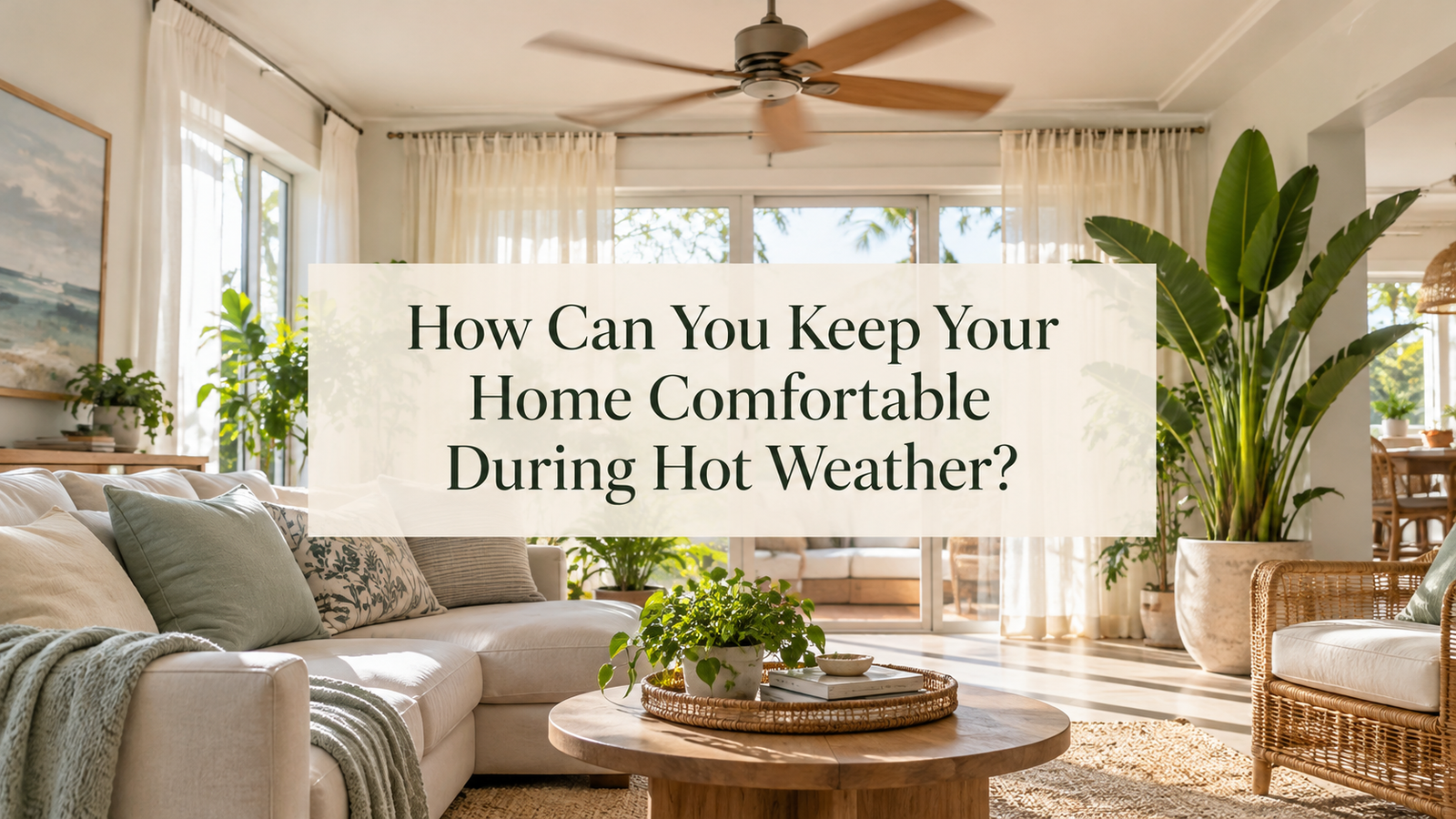
Hot weather can make everyday life uncomfortable, especially when the temperature rises inside the house. During summer, rooms often become warm, indoor air feels heavy, and sleeping peacefully can become difficult. Even simple activities such as cooking, cleaning, and relaxing may feel exhausting when the home is not properly cooled.
Keeping your home comfortable during hot weather does not always require expensive air conditioning systems or major renovations. Small changes in ventilation, window coverings, furniture arrangement, and daily habits can make a noticeable difference.
A comfortable home should provide a pleasant indoor temperature, fresh air, and protection from excessive heat. Understanding how heat enters your house and how to reduce its effects can help create a cooler living environment.
In this article, we will explore practical ways to keep your home cool during summer, reduce indoor heat, improve airflow, and maintain a comfortable atmosphere without unnecessarily increasing electricity bills.
1. Keep Direct Sunlight Away From Your Windows
One of the main reasons homes become hot during summer is direct sunlight entering through windows. When sunlight passes through glass, it warms furniture, floors, walls, and other surfaces inside the room.
These surfaces gradually release heat, making the indoor environment uncomfortable.
Installing curtains, blinds, or shades can help reduce the amount of sunlight entering your home. Light colored curtains are useful because they generally absorb less sunlight than darker materials.
Thick curtains with thermal backing may also help reduce heat entering through windows.
For the best results, keep curtains closed during the hours when sunlight directly hits your windows. East facing windows may receive strong morning sunlight, while west facing windows often experience intense afternoon heat.
Outdoor shading, such as awnings or suitable plants, can provide additional protection by stopping sunlight before it reaches the glass.
2. Improve Natural Ventilation
Proper ventilation plays an important role in keeping your home comfortable during hot weather.
Fresh air circulation can remove accumulated indoor heat when the outdoor temperature is lower than the indoor temperature. However, opening windows during extremely hot afternoons may allow additional heat to enter.
A practical approach is to open windows during cooler mornings, evenings, or nighttime hours when outdoor conditions are suitable.
Opening windows on opposite sides of the house can create cross ventilation. This allows air to enter from one direction and exit through another.
For example, opening a bedroom window and another window across the hallway may help create a steady movement of air.
Homes with good ventilation often feel more comfortable because moving air helps the body release heat through evaporation of sweat.
Always consider outdoor air quality, security, and humidity before leaving windows open.
3. Use Ceiling Fans and Portable Fans Effectively
Fans are among the simplest and most affordable ways to improve comfort during summer.
Ceiling fans create air movement that helps people feel cooler even when the actual room temperature remains unchanged.
Portable fans can also improve airflow in bedrooms, living rooms, and workspaces.
Positioning a fan near a window may help move cooler outdoor air into a room or push warmer indoor air outside when outdoor temperatures are lower.
For rooms with limited ventilation, placing a portable fan where people sit or sleep can improve personal comfort.
Remember that fans primarily cool people rather than empty rooms. Turning them off when leaving a room can help save electricity.
During extreme heat, fans alone may not provide enough protection, especially when indoor temperatures become dangerously high.
4. Choose Light Colored Interior Decorations
The colors used inside a home can influence its visual atmosphere and how bright or spacious it feels.
Light colored walls, curtains, and furniture often create a fresh appearance that suits summer living.
White, cream, beige, light gray, and soft pastel shades can make rooms appear brighter and more open.
Although changing interior colors does not automatically reduce room temperature significantly, lighter furnishings exposed to sunlight may absorb less radiant heat than darker alternatives.
For better temperature control, focus on shading windows and improving insulation alongside decorative changes.
You can also use lightweight cotton cushion covers, breathable fabrics, and simple decorations to create a more relaxed summer environment.
These adjustments are particularly useful in bedrooms and living rooms where comfort is important throughout the day.
5. Reduce Heat Produced by Kitchen Appliances
Cooking can increase indoor temperatures, particularly in homes with small kitchens or limited ventilation.
Ovens, stovetops, and other cooking appliances release heat while operating. During hot afternoons, this additional warmth can spread into nearby rooms.
Planning cooking activities during cooler morning or evening hours can help reduce discomfort.
Preparing meals that require less cooking time may also be useful during extremely hot weather.
Using an exhaust fan or kitchen ventilation system can remove some of the heat, steam, and cooking odors.
Keep kitchen doors open when appropriate to improve ventilation, but avoid allowing excessive cooking heat to spread into bedrooms.
Always maintain adequate ventilation when using gas appliances.
Choosing simple meals, preparing ingredients in advance, and using suitable smaller appliances can make summer cooking more manageable.
6. Improve Roof and Wall Insulation
Roofs and exterior walls absorb considerable heat during summer, especially when they receive direct sunlight for several hours.
Without suitable insulation, this heat can move into indoor living spaces.
Roof insulation helps slow heat transfer and can improve comfort throughout the year.
Materials such as fiberglass, mineral wool, and suitable rigid insulation boards are commonly used in different building applications.
The appropriate insulation depends on the building structure, climate, moisture conditions, and local construction requirements.
Reflective roofing materials or properly designed roof coatings may also reduce solar heat absorption.
However, their effectiveness depends on roof condition, installation quality, and environmental factors.
Before making major changes, consult a qualified building professional to identify suitable insulation improvements.
Good insulation can reduce cooling demand and contribute to lower electricity consumption over time.

7. Use Air Conditioning Wisely
Air conditioning can provide significant relief when outdoor temperatures become extremely high.
However, inefficient use may increase electricity bills without improving comfort proportionately.
Set your air conditioner to a comfortable temperature rather than selecting the lowest possible setting.
A setting around 24°C to 26°C may work well for many households, although personal preferences, humidity, and health needs can vary.
Keep doors and windows closed while the air conditioner is operating to prevent unnecessary heat from entering.
Clean air filters according to manufacturer recommendations and arrange regular maintenance when needed.
Dirty filters and poorly maintained equipment can reduce cooling performance.
Using ceiling fans alongside air conditioning may help distribute cool air and allow a slightly higher thermostat setting.
Avoid blocking indoor air vents with furniture or curtains.
These simple habits can improve cooling efficiency while keeping indoor spaces pleasant.
8. Select Breathable Bedding and Fabrics
Sleeping comfortably during summer can be challenging when bedding traps body heat.
Heavy blankets, thick bedcovers, and synthetic fabrics may feel uncomfortable in warm bedrooms.
Lightweight cotton sheets and breathable bedding materials can improve sleeping comfort.
Linen is another option because it allows airflow and can feel pleasant in warm conditions.
Choose pillows and mattresses that provide adequate comfort without excessive heat retention.
Keep unnecessary blankets away from the bed during summer and use lightweight covers when needed.
Wearing loose, breathable sleepwear can also help the body regulate heat.
For additional comfort, improve bedroom airflow before bedtime and limit heat producing activities near the sleeping area.
A cooler sleeping environment can contribute to better rest and a more refreshing morning.
9. Add Outdoor Shade Around Your Home
Outdoor shading is an effective method of reducing the amount of sunlight reaching your house.
Trees, pergolas, awnings, and covered seating areas can provide protection against direct solar heat.
Planting suitable shade trees near exposed walls or windows may reduce heat gain over time.
However, trees should be selected carefully based on their mature size, root systems, and distance from building foundations.
Climbing plants supported by properly designed structures can also provide seasonal shade.
For outdoor seating areas, umbrellas and shade sails can make gardens, patios, and terraces more comfortable.
Adding shade around west facing windows is particularly useful in many hot climates because afternoon sunlight can be intense.
Properly positioned outdoor shading can support indoor cooling while improving the appearance of your home.
10. Control Indoor Humidity
Humidity can make hot weather feel more uncomfortable because excessive moisture in the air slows the evaporation of sweat.
When humidity is high, even moderate indoor temperatures may feel unpleasant.
Bathrooms, kitchens, and laundry areas can contribute additional moisture to the home.
Use exhaust fans when bathing or cooking, and repair plumbing leaks promptly.
Avoid drying large amounts of wet laundry inside poorly ventilated rooms.
In humid climates, a properly sized dehumidifier or air conditioning system with effective moisture removal can improve comfort.
An indoor humidity level of approximately 30% to 50% is often recommended for household conditions, although climate and building characteristics matter.
A simple humidity monitor can help you understand whether excessive indoor moisture is contributing to discomfort.
11. Turn Off Unnecessary Electronic Devices
Many household electronics produce heat while operating.
Televisions, computers, gaming systems, lighting equipment, and other electrical appliances can increase indoor heat, especially in small rooms.
Although individual devices may release limited amounts of heat, several devices operating together can make a noticeable difference.
Turn off equipment when it is not needed.
Switching from traditional incandescent bulbs to energy efficient LED lighting can also reduce unnecessary heat production.
Arrange electronic equipment so ventilation openings remain clear and heat can escape safely.
Avoid placing powerful electronic devices close to beds or seating areas when possible.
Reducing unnecessary electricity consumption offers two benefits: it helps limit indoor heat and lowers energy use.
12. Keep Doors and Windows Properly Sealed
Small gaps around windows and doors can allow warm outdoor air to enter when your home is being cooled.
These gaps may reduce the effectiveness of air conditioning and make indoor temperatures harder to maintain.
Inspect window frames, door edges, and other common areas where air leakage occurs.
Weatherstripping and appropriate sealing materials can help reduce unwanted airflow.
However, buildings still need adequate ventilation for healthy indoor air quality.
Avoid sealing intentional ventilation openings or air supplies required for fuel burning appliances.
Door sweeps may also help reduce air leakage beneath exterior doors.
Proper sealing is especially beneficial when combined with insulation and efficient cooling equipment.
13. Keep Your Home Clean and Uncluttered
A clean and organized home can feel more pleasant during hot weather.
Crowded rooms often make movement difficult, and poorly positioned furniture may block windows, fans, or air conditioning vents.
Arrange furniture to support comfortable walking spaces and unobstructed airflow.
Avoid placing large wardrobes or sofas directly in front of ventilation openings.
Remove unnecessary objects from windowsills and areas near fans.
Regular cleaning also helps reduce dust accumulation on fans, vents, and other household surfaces.
While decluttering does not directly lower room temperature, it can improve the overall comfort and usability of your living environment.
A simple, organized room often feels more relaxing during long summer afternoons.
14. Create a Comfortable Summer Routine
Daily habits can influence how comfortable your home feels during hot weather.
Start by checking outdoor conditions before opening windows or curtains.
During cooler hours, improve ventilation where appropriate. As outdoor temperatures increase, close sun exposed windows and use curtains or blinds to reduce heat gain.
Limit unnecessary use of heat producing appliances during the hottest part of the day.
Drink enough water throughout the day and wear lightweight clothing while relaxing indoors.
Consider using the coolest room in the house for activities that require longer periods of sitting or concentration.
For families with children or older adults, pay extra attention to indoor temperatures and hydration.
During extreme heat, watch for warning signs such as dizziness, confusion, severe weakness, or unusual tiredness. Seek appropriate medical help if heat illness is suspected.
A consistent summer routine can help maintain comfort while reducing unnecessary energy consumption.
15. Consider Long Term Home Cooling Improvements
Some home cooling solutions require an initial investment but may offer lasting benefits.
Improving roof insulation, installing suitable exterior shading, upgrading inefficient windows, and choosing an appropriately sized cooling system can improve indoor conditions.
Energy efficient windows with suitable solar control glazing may reduce unwanted heat gain.
Window films can also help limit solar heat transmission, although compatibility with existing glass should be checked before installation.
In suitable climates, reflective roof surfaces may reduce the amount of solar energy absorbed by the building.
When planning improvements, consider which parts of your home receive the most sunlight and experience the highest temperatures.
A professional energy assessment may help identify the most effective upgrades.
Rather than spending money on several unnecessary products, focus on improvements that address the main causes of indoor heat.
Conclusion
Keeping your home comfortable during hot weather is possible through a combination of practical habits, suitable materials, and effective cooling methods.
Blocking direct sunlight, improving natural ventilation, using fans correctly, maintaining air conditioning, and reducing unnecessary heat sources can make a noticeable difference.
Roof insulation, outdoor shading, breathable bedding, and proper humidity control can further improve indoor comfort.
The most effective approach is to understand how your home responds to hot weather and make improvements based on its specific needs.
Not every household requires expensive cooling equipment or major structural changes. Small adjustments, when used consistently, can help create a more pleasant and energy efficient living environment.
A comfortable summer home is not simply about lowering the temperature. It is about managing sunlight, airflow, humidity, and everyday activities to create a healthy and relaxing space for everyone.