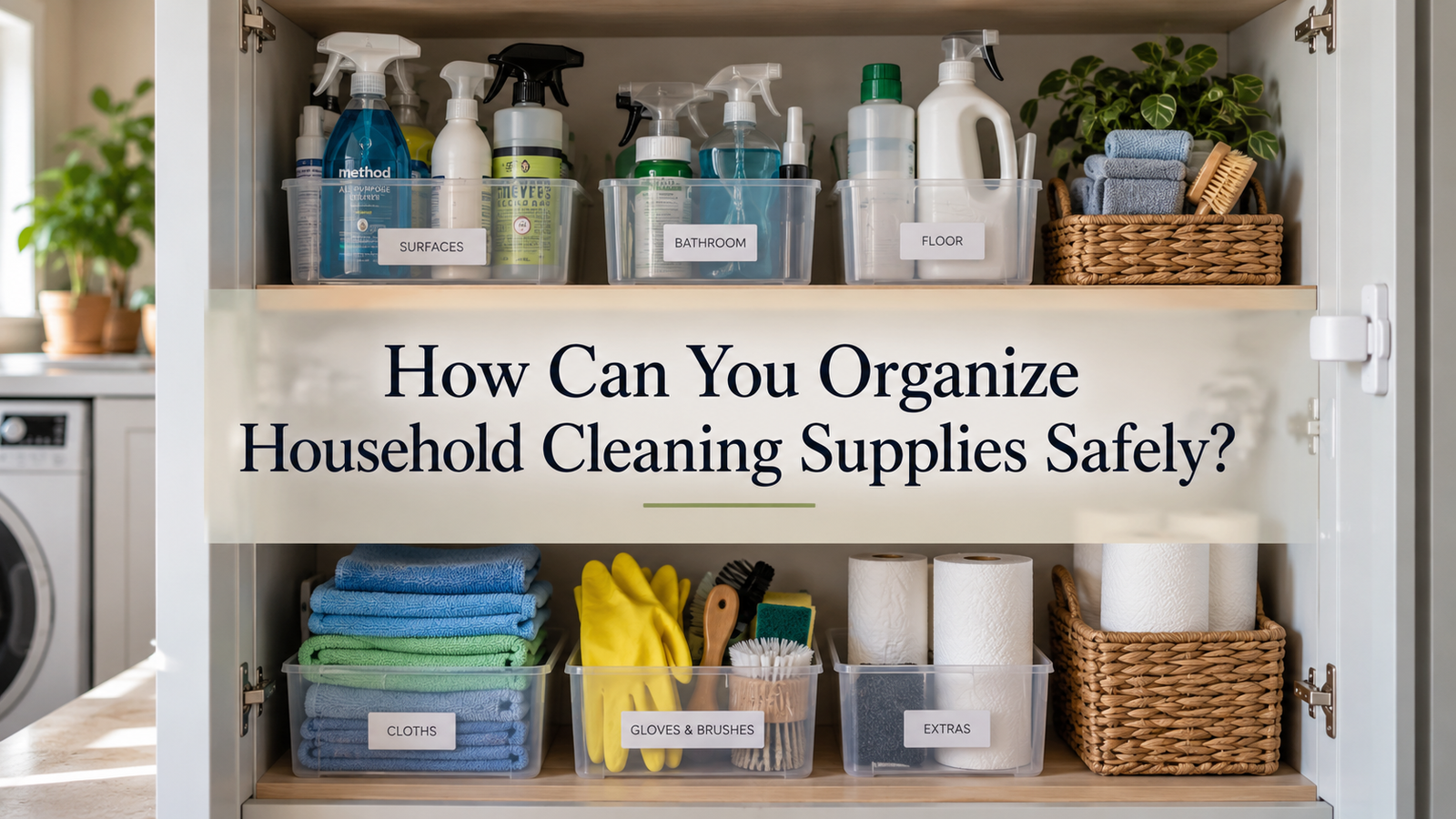
Keeping a home clean is an important part of maintaining a healthy and comfortable living environment. From washing dishes and cleaning floors to disinfecting bathrooms and removing dust, household cleaning products help us complete everyday tasks. However, many people focus on using these products without giving much attention to how they are stored and organized.
Proper household cleaning supplies organization is not only about keeping cabinets neat. It also helps prevent accidents, reduces unnecessary purchases, saves time, and makes daily cleaning easier. Some cleaning products contain chemicals that can be harmful if they are swallowed, spilled, mixed incorrectly, or handled without care.
After learning about home organization and cleaning safety, I realized that even small changes in storage habits can make a significant difference. A well organized cleaning area allows family members to find the right products while keeping potentially dangerous items away from children and pets.
In this article, we will explore practical ways to organize household cleaning supplies safely, choose suitable storage spaces, and develop simple habits that support a cleaner and safer home.
Why Is It Important to Organize Household Cleaning Supplies?
Household cleaning products are used regularly, but they are often stored without a proper system. Spray bottles may be placed beside food items, bathroom cleaners may be mixed with laundry products, and old containers can remain forgotten for months.
This type of disorganization creates several problems.
First, it becomes difficult to find the right product when needed. Second, storing incompatible chemicals together can increase the risk of dangerous reactions if containers leak or spill. Third, poorly arranged supplies may become accessible to young children or pets.
Organizing cleaning supplies helps solve these issues by giving every product a suitable place.
A proper storage system also makes it easier to monitor product quantities and identify damaged or expired containers.
Most importantly, safe organization encourages responsible cleaning habits throughout the household.
Choose a Safe Location for Cleaning Supplies
The first step in organizing household cleaning supplies is selecting a suitable storage location.
Many homes have cleaning products scattered across kitchens, bathrooms, laundry rooms, and storage areas. Although keeping certain products close to where they are used can be convenient, safety should always come first.
Ideally, cleaning supplies should be stored in a dry, cool, and well ventilated location according to the manufacturer’s instructions.
A dedicated cabinet or storage closet is often a practical choice.
Avoid placing cleaning chemicals near cooking ingredients, drinking water, medicines, or personal care products.
Heat and direct sunlight can also affect certain cleaning products. For this reason, locations near stoves, heaters, and sunny windows are generally unsuitable.
If your home has limited storage space, consider using a high cabinet with a secure lock rather than leaving cleaning bottles under an open sink.
The best storage location should combine convenience, accessibility for responsible adults, and protection from accidental exposure.
Keep Cleaning Products Away From Children and Pets
Child safety is one of the most important considerations when organizing household cleaning supplies.
Young children are naturally curious. Brightly colored liquids, attractive packaging, and spray bottles may catch their attention.
Pets may also investigate containers that are left on floors or inside accessible cabinets.
To reduce these risks, store hazardous cleaning products inside locked cabinets or closets.
A high shelf alone is not always sufficient because children may climb furniture or use nearby objects to reach stored items.
Cabinet locks should be strong enough to prevent easy access.
Never leave chemical products unattended while cleaning, even for a short period.
After using a product, close its container properly and return it to secure storage immediately.
These simple precautions can greatly reduce the chance of accidental poisoning or chemical exposure.
Separate Cleaning Products Into Categories
One of the easiest ways to organize household cleaning supplies is to group them according to their purpose.
Instead of placing every bottle and tool together, create separate areas for different cleaning tasks.
For example, kitchen cleaning products may include dishwashing liquid, surface cleaners, and degreasers.
Bathroom cleaning supplies may include toilet cleaners, tile cleaners, and products designed to remove soap residue.
Laundry supplies may include detergents, fabric softeners, and stain removers.
General household cleaning supplies may include dusting cloths, furniture cleaners, and floor cleaning solutions.
Grouping products makes them easier to identify and prevents unnecessary searching.
However, products should not be stored together simply because they serve similar purposes.
Chemical compatibility is more important than convenience. Products containing bleach, ammonia, acids, or other reactive ingredients must be stored according to their labels and kept separated where needed to prevent accidental mixing.
A clear organization system should consider both product categories and chemical safety.

Use Strong Storage Bins and Containers
Storage bins can help maintain order inside cleaning cabinets.
Instead of placing bottles directly across shelves, consider using sturdy plastic trays or bins that are resistant to moisture and suitable for holding cleaning products.
These containers can catch minor leaks and make supplies easier to arrange.
Choose bins with stable bases and enough space to keep bottles standing upright.
Avoid overcrowding because tightly packed containers are more likely to fall or become damaged when someone removes an item.
Separate bins can also prevent incompatible products from contacting one another if a spill occurs, provided the bins are appropriate for the chemicals being stored.
Transparent bins are useful for quickly identifying contents.
However, chemicals should remain in their original labeled bottles rather than being poured into ordinary storage containers.
The purpose of storage bins is to organize products, not replace their original packaging.
Always Keep Cleaning Products in Original Containers
One of the most important cleaning supply safety rules is to keep chemical products in their original containers.
Some people transfer cleaning liquids into water bottles, juice bottles, or decorative containers to save space.
This practice is dangerous because another person may mistake the chemical for something safe to drink.
Original packaging usually contains important safety information, including instructions for use, storage precautions, ingredient warnings, and emergency guidance.
These details may be essential if an accident occurs.
If a label becomes damaged or unreadable, contact the manufacturer for guidance rather than guessing what the container contains.
Do not combine leftover products from different bottles.
Even products with similar names may contain different ingredients that can react when mixed.
Maintaining original packaging is a simple but essential part of safe household cleaning supplies organization.
Never Mix Different Cleaning Chemicals
Cleaning products should never be mixed unless their labels specifically state that doing so is safe.
Some combinations can produce harmful gases or cause dangerous chemical reactions.
For example, mixing bleach with ammonia can release toxic chloramine gases.
Combining bleach with acidic products, including some toilet bowl cleaners and vinegar, can release chlorine gas.
These reactions can cause serious breathing difficulties and other health problems.
Keeping incompatible products separated helps reduce the possibility of accidental mixing.
It is also important to rinse surfaces appropriately when changing between cleaning products, following label directions.
Avoid experimenting with homemade cleaning combinations without understanding their ingredients and safety requirements.
A clean home should never come at the expense of household safety.
Organize Cleaning Tools Separately
Cleaning tools deserve just as much attention as chemical products.
Mops, brushes, sponges, microfiber cloths, and dusters can become disorganized when they are placed together without proper storage.
A practical solution is to designate separate areas for tools and chemical supplies.
Wall mounted hooks can hold brooms, mops, and dustpans.
Small baskets can organize microfiber cloths and reusable cleaning pads.
Bathroom brushes should be kept separate from kitchen cleaning equipment to reduce the risk of transferring germs between areas.
After use, reusable tools should be cleaned as appropriate and allowed to dry completely before storage.
Damp sponges and cloths can encourage unpleasant odors and microbial growth.
Proper tool organization helps maintain hygiene while making everyday cleaning more convenient.
Make Better Use of Vertical Storage Space
Small homes often have limited cabinet space, making vertical storage particularly useful.
Wall shelves, hanging organizers, and adjustable cabinet racks can create additional storage without occupying valuable floor space.
For example, a laundry room wall can accommodate hooks for lightweight cleaning tools.
A tall locked cabinet can provide several levels of storage for different supplies.
However, heavy containers should generally be placed on lower shelves to reduce the risk of falling.
Hazardous products must still remain inaccessible to children and pets.
Avoid installing shelves in areas where bottles could fall onto food preparation surfaces or frequently used walkways.
When arranged carefully, vertical storage can improve organization while maintaining a safe environment.
Label Storage Areas Clearly
Labels can make a cleaning supply storage system easier to maintain.
Even when products remain in their original containers, adding labels to shelves or storage bins can help family members identify where different items belong.
For example, you might label separate areas for laundry supplies, kitchen cleaning products, bathroom cleaning products, and reusable tools.
These labels make returning items to their correct locations more convenient.
They can also help prevent someone from placing an incompatible chemical in the wrong storage area.
Use simple, readable wording rather than complicated descriptions.
In households where several adults share cleaning responsibilities, clear labels can improve consistency.
A good organization system should be easy for everyone responsible for cleaning to understand.
Store Frequently Used Items Conveniently
Daily cleaning becomes easier when frequently used supplies are organized thoughtfully.
Products used every day should be convenient for responsible adults to access without compromising safety.
For example, dishwashing liquid may be kept in its original labeled container near the kitchen sink when it can be safely controlled and kept away from children.
Less frequently used chemical cleaners can remain inside a dedicated locked storage cabinet.
You can also prepare a small cleaning kit containing nonchemical tools such as microfiber cloths, gloves, and soft brushes.
A portable caddy may be useful for carrying products during cleaning, but chemical bottles should never be left inside an unattended caddy where children or pets can reach them.
Return all cleaning chemicals to secure storage immediately after use.
Convenience should support safe habits rather than replace them.
Check Cleaning Supplies Regularly
A well organized cleaning cabinet requires occasional inspection.
Over time, bottles may become damaged, labels may fade, and unused products may accumulate.
Checking your supplies every few months can help identify these problems.
Look for leaking containers, loose caps, unusual changes in product appearance, and damaged packaging.
Follow the manufacturer’s guidance regarding shelf life and storage conditions.
Some cleaning solutions may become less effective over time, while others may require special handling when they are no longer needed.
Avoid keeping unnecessary products simply because they were purchased previously.
Regular inspections help maintain an organized cabinet and reduce the risk of storing unsafe materials.
Dispose of Unwanted Cleaning Products Responsibly
Removing unwanted cleaning supplies is an important part of household organization.
However, chemical products should not automatically be poured into drains, toilets, or outdoor soil.
Certain cleaners may contain ingredients that require special disposal.
Always read the product label for disposal instructions.
If the label does not provide sufficient information, consult your local waste management authority for appropriate guidance.
Never mix leftover cleaning chemicals to reduce the number of containers.
Do not burn chemical packaging or reuse empty containers for food and drinking water.
Some empty containers may be accepted through local recycling programs, depending on the material and any remaining residue.
Responsible disposal protects household members, sanitation workers, and the surrounding environment.
Create a Simple Household Cleaning Supply Inventory
An inventory can make managing household cleaning supplies easier, especially in larger families.
You do not need complicated software or a detailed spreadsheet.
A small notebook or simple phone list is often enough.
Record the cleaning products you currently have, their general purpose, and which items need replacement.
This helps prevent buying multiple bottles of the same product unnecessarily.
It also encourages you to finish suitable existing products before purchasing more.
A basic inventory can be checked before visiting the supermarket.
Over time, this habit may reduce household expenses and prevent storage cabinets from becoming overcrowded.
Encourage Safe Cleaning Habits Among Family Members
A successful household cleaning organization system depends on consistent habits.
Adults who share cleaning responsibilities should understand where products are stored and how they should be handled.
Explain why chemical cleaners must remain inside their original containers and why different products should never be mixed.
Family members should also know the importance of closing bottle caps and cleaning up spills according to product instructions.
Children can participate in age appropriate household tasks, such as organizing clean cloths or putting away nonhazardous tools, under suitable supervision.
They should not handle hazardous cleaning chemicals.
Encouraging responsible behavior helps maintain a safer and more organized household.
Common Mistakes to Avoid When Storing Cleaning Supplies
Even an attractive cleaning cabinet can be unsafe if basic precautions are ignored.
A common mistake is storing cleaning products alongside food, beverages, or medicines.
Another is keeping hazardous chemicals in unlocked cabinets within reach of children.
Some households also place heavy bottles on high shelves, increasing the risk of falling containers and spills.
Overcrowding cabinets, removing product labels, and transferring liquids into unmarked bottles are additional problems.
Storing damp cleaning tools in closed containers can also create unpleasant odors.
The best way to avoid these mistakes is to design a storage system around safety, not appearance alone.
Final Thoughts
Learning how to organize household cleaning supplies safely is an important part of maintaining a comfortable and responsible home.
A good organization system does not require expensive cabinets or complicated equipment. It begins with selecting a secure storage location, keeping products in their original containers, separating incompatible chemicals, and arranging cleaning tools properly.
Using suitable storage bins, labeling shelves, inspecting products regularly, and disposing of unwanted chemicals responsibly can make household cleaning more efficient.
It is equally important to keep hazardous products away from children and pets and encourage safe cleaning habits among responsible family members.
From what I have learned about home organization, the most effective systems are usually simple enough to follow every day. When every product has a designated place and safety becomes a regular habit, maintaining a clean home feels much easier.
A properly organized cleaning area may seem like a small improvement, but it can make a meaningful difference in household safety, convenience, and everyday comfort.