
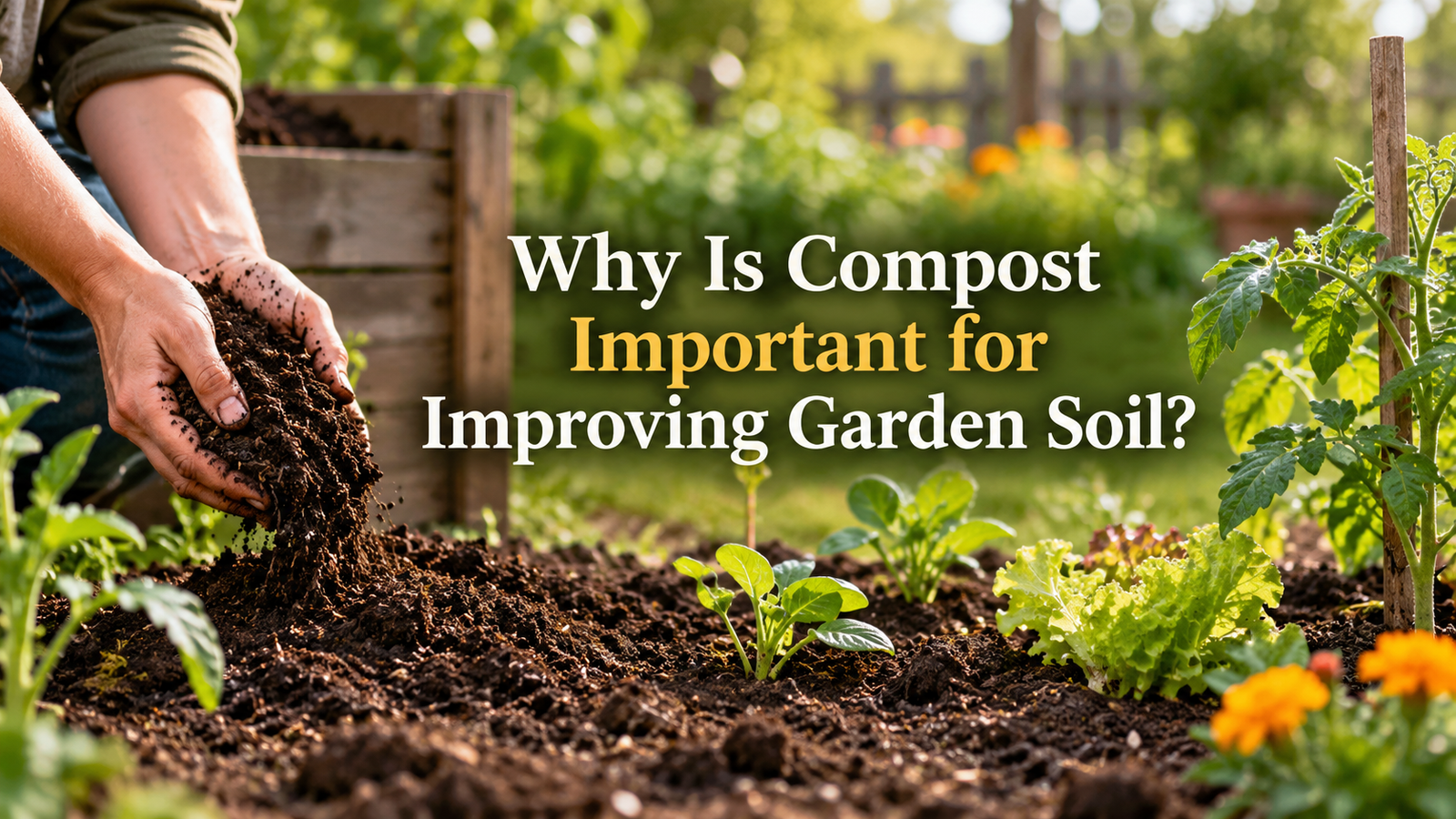
A healthy garden begins with healthy soil. Many people focus on choosing beautiful plants, buying quality seeds, and watering regularly, but they often overlook the condition of the soil. Soil provides plants with essential nutrients, moisture, air, and support for root development. When garden soil becomes weak or loses its natural fertility, plants may struggle to grow properly. One of the most effective ways to improve soil health naturally is by adding compost.
Compost is an organic material created through the natural decomposition of plant waste, food scraps, and other biodegradable materials. It improves soil structure, supports beneficial microorganisms, and helps plants receive the nutrients they need. Gardeners have used compost for generations because it provides a practical way to maintain productive soil without depending entirely on chemical fertilizers.
Understanding why compost is important for improving garden soil can help beginners and experienced gardeners create healthier gardens. Whether someone grows vegetables, flowers, herbs, or decorative plants, compost can make a noticeable difference in soil quality and plant growth.
What Is Compost and How Does It Work?
Compost is a dark, crumbly organic material produced when microorganisms break down biodegradable waste under suitable conditions. Common compost ingredients include dry leaves, grass clippings, vegetable peels, fruit scraps, and small plant remains.
During decomposition, bacteria, fungi, and other organisms gradually transform these materials into a stable substance that can be mixed with garden soil.
Finished compost usually has an earthy smell and a texture similar to loose soil. It contains organic matter and varying amounts of plant nutrients.
When compost is added to garden soil, it improves the environment around plant roots. It also supports the organisms responsible for recycling nutrients and maintaining natural soil processes.
Unlike many fertilizers that mainly supply nutrients, compost improves several physical, chemical, and biological properties of soil.
This makes compost valuable for maintaining long term soil fertility.
Why Is Compost Important for Garden Soil?
Compost is important because it helps soil become more suitable for healthy plant growth. Garden soil needs more than nutrients alone. It must also hold enough water, allow excess moisture to drain, and provide sufficient air for plant roots.
Poor soil may become compacted, dry too quickly, or struggle to support beneficial microorganisms.
Adding compost can improve these conditions by increasing the amount of organic matter in the soil.
Organic matter plays an important role in supporting soil fertility. It helps soil particles form stable aggregates, which create spaces for air and water movement.
Compost also contributes nutrients that become available as organic materials continue to break down.
Regular compost application can gradually improve soil quality, making gardening easier and more productive.
How Does Compost Improve Soil Structure?
Soil structure refers to the way individual soil particles are arranged and grouped together. Good soil structure allows roots to spread easily while maintaining a healthy balance of air and moisture.
Some garden soils become hard and compacted, especially when they contain large amounts of clay or experience frequent foot traffic.
Compacted soil restricts root growth and reduces the movement of water and oxygen.
Compost improves soil structure by adding organic matter that encourages soil particles to form stable groups.
These groups create small spaces through which water, air, and plant roots can move.
In clay soil, compost can improve workability and help reduce surface crusting.
In sandy soil, compost increases the soil’s ability to retain moisture and nutrients.
Over time, these improvements create a more comfortable growing environment for garden plants.
How Does Compost Help Soil Retain Moisture?
Water is essential for plant growth, but different soil types manage moisture differently.
Sandy soil often drains quickly, allowing water to move beyond the reach of plant roots. Clay soil may retain considerable moisture but can become poorly aerated when saturated.
Compost helps improve the balance between water retention and drainage.
Organic matter can absorb and hold moisture, allowing more water to remain available around plant roots.
This is especially beneficial during warm weather when garden soil dries quickly.
When compost is regularly incorporated into suitable soil, gardeners may notice that the ground stays moist for longer periods.
However, compost does not eliminate the need for watering. Plants still require irrigation according to their growing conditions, weather, and soil moisture.
The main advantage is that compost helps soil manage water more effectively.
How Does Compost Provide Nutrients to Plants?
Plants require essential nutrients for healthy development. Nitrogen supports leafy growth, phosphorus contributes to root development and energy transfer, and potassium helps regulate important plant functions.
Compost contains these nutrients in varying amounts, depending on the materials used during decomposition.
As compost continues to break down in garden soil, microorganisms gradually release nutrients into forms that plants can absorb.
This process supports a more continuous supply of nutrients rather than delivering everything immediately.
Compost can also supply smaller amounts of calcium, magnesium, sulfur, and other essential elements.
However, compost is not always a complete replacement for fertilizer. Some plants, especially heavy feeding vegetables, may require additional nutrients depending on soil conditions.
A soil test can help gardeners determine whether extra fertilizer is necessary.
Using compost alongside sensible nutrient management provides a practical approach to maintaining healthy garden soil.
Why Are Beneficial Soil Microorganisms Important?
Healthy soil contains an enormous variety of living organisms, including bacteria, fungi, protozoa, and other microscopic life.
Many of these organisms contribute to nutrient recycling and the breakdown of organic matter.
Compost provides organic materials that support microbial activity in the soil.
When beneficial microorganisms break down organic substances, nutrients can become available for plant roots.
Some soil organisms also help maintain soil structure by producing substances that bind soil particles together.
A diverse soil community contributes to a functioning garden ecosystem.
Compost can support this biological activity, especially when the soil has previously received little organic matter.
For best results, gardeners should use finished compost and avoid practices that unnecessarily damage soil life.
Maintaining suitable moisture levels and reducing excessive soil disturbance can further support beneficial organisms.
Can Compost Improve Clay and Sandy Soil?
One of the most useful characteristics of compost is its ability to improve different soil types.
Clay and sandy soils have very different properties, but both can benefit from organic matter.
Compost for Clay Soil
Clay soil contains very fine particles that can hold considerable water. However, it may become sticky when wet and hard when dry.
Adding mature compost can improve soil aggregation and make clay soil easier to cultivate.
Better aggregation may allow water to move through the soil more effectively and provide improved conditions for root development.
Compost for Sandy Soil
Sandy soil contains larger particles and usually drains quickly.
Because of its loose structure, water and some nutrients can move through sandy soil before plants absorb them.
Compost improves moisture retention and increases the soil’s ability to hold certain nutrients.
These benefits make compost a useful amendment for gardeners working with challenging soil conditions.
How Does Compost Support Healthy Root Growth?
Roots are responsible for absorbing water and nutrients while anchoring plants in the ground.
When soil is compacted or poorly aerated, roots may struggle to spread through the surrounding area.
Compost helps create a more favorable environment by improving soil structure, moisture availability, and biological activity.
Loose, well structured soil allows roots to explore a larger area.
A wider root system can help plants access more water and nutrients.
Compost also supports microbial processes that contribute to nutrient availability around plant roots.
However, healthy roots still depend on other factors, including proper drainage, suitable soil temperature, and appropriate watering.
Compost works best when these basic growing conditions are also maintained.
Why Is Compost Useful for Vegetable Gardens?
Vegetable gardens require careful soil management because crops regularly remove nutrients from the soil.
Tomatoes, peppers, cucumbers, spinach, and many other vegetables grow best when their roots have access to adequate moisture, nutrients, and oxygen.
Adding mature compost before planting can improve the growing environment.
Compost may also help vegetable beds maintain better soil structure throughout the growing season.
For gardeners who plant several crops each year, replacing some of the organic matter lost through cultivation and decomposition is particularly important.
A practical approach is to spread a moderate layer of finished compost over the vegetable bed and gently mix it into the upper soil where appropriate.
Gardeners should avoid adding excessive amounts, especially when soil already contains high nutrient levels.
Regular soil testing and responsible compost application help maintain a healthy balance.
Can Compost Reduce the Need for Chemical Fertilizers?
Compost can reduce the need for some purchased fertilizers by providing nutrients and improving the soil’s ability to retain them.
However, the amount of nutrients supplied depends on the compost ingredients and how thoroughly the material has decomposed.
Homemade compost usually contains variable nutrient concentrations.
For this reason, gardeners should not assume that every batch provides the same fertility benefits.
Compost is particularly valuable for improving soil quality, while fertilizers may be needed to address specific nutrient deficiencies.
The most effective approach is to understand the needs of the plants and the existing condition of the soil.
Using compost responsibly can reduce unnecessary fertilizer applications and encourage more sustainable gardening practices.
How Can You Make Compost at Home?
Making compost at home is a simple way to recycle suitable organic waste while producing useful material for garden soil.
A compost pile or container can be placed in a convenient outdoor location with adequate drainage.
Gardeners can use a mixture of green and brown materials.
Green materials include vegetable scraps, fresh grass clippings, and other relatively nitrogen rich plant waste.
Brown materials include dry leaves, shredded cardboard, and small pieces of untreated woody material.
A balanced mixture helps microorganisms break down organic waste effectively.
The compost should remain moist but not waterlogged. Turning the pile occasionally introduces oxygen and encourages even decomposition.
Avoid adding meat, dairy products, oily food, pet waste, and diseased plant material to an ordinary home compost pile.
These materials may create unpleasant odors, attract pests, or introduce unwanted organisms.
Composting time depends on temperature, moisture, ingredients, and maintenance.
The compost is generally ready when the original materials are mostly unrecognizable and the mixture has a dark, crumbly appearance and earthy smell.
What Is the Best Way to Add Compost to Garden Soil?
Finished compost can be applied in several ways depending on the garden and the plants being grown.
For a new garden bed, a layer of mature compost approximately 2 to 5 centimeters thick can often be worked into the upper soil before planting.
For established garden beds, compost can be spread over the soil surface and allowed to gradually integrate through natural biological activity.
Around existing plants, a thin layer of compost can be applied without covering the stems or crowns.
For container gardening, compost can be included as part of an appropriate potting mixture, but it should not usually replace the entire growing medium.
The correct amount depends on the existing soil, compost quality, and plant requirements.
Excessive compost application can cause nutrient imbalances, especially when manure based compost contains high levels of phosphorus or salts.
Moderate and regular applications are generally preferable to using large amounts without checking soil conditions.
Common Mistakes to Avoid When Using Compost
Compost is beneficial, but incorrect use can create problems.
One common mistake is adding unfinished compost directly around sensitive plants. Material that is still decomposing actively may temporarily reduce available nitrogen or cause other growing difficulties.
Another mistake is assuming that more compost always produces better results.
Too much compost can increase certain nutrient concentrations beyond what plants require.
Gardeners should also avoid using compost that smells strongly of ammonia or rotten materials, as these signs may indicate incomplete or poorly managed decomposition.
Compost made from contaminated waste may introduce unwanted substances into garden soil.
Choosing clean ingredients, allowing proper decomposition, and applying reasonable amounts helps prevent these issues.
How Does Compost Support Sustainable Gardening?
Composting allows gardeners to turn suitable kitchen and garden waste into a valuable resource.
Instead of sending leaves, vegetable scraps, and plant clippings to waste disposal facilities, these materials can be reused to improve soil.
This reduces the amount of organic waste requiring disposal and encourages more efficient resource use.
Compost also contributes organic carbon to garden soil and helps maintain natural nutrient cycling.
Although composting itself releases some greenhouse gases, well managed composting can offer environmental benefits when compared with less suitable organic waste disposal methods.
Sustainable gardening involves caring for the soil rather than focusing only on immediate plant growth.
Regular composting is one practical way to support this approach.
Conclusion
Compost is important for improving garden soil because it supports soil structure, moisture retention, nutrient availability, and beneficial biological activity. These improvements create a healthier environment for plant roots and help gardens remain productive over time.
Whether the soil is sandy, clay based, or naturally fertile, adding suitable amounts of mature compost can provide valuable benefits.
Compost is not a complete solution to every gardening problem, but it is one of the most useful materials for maintaining healthy soil naturally.
By recycling organic waste, applying compost responsibly, and understanding the needs of different plants, gardeners can improve soil quality while developing more sustainable gardening habits.
A successful garden does not depend only on what grows above the ground. It also depends on the living soil beneath it. Caring for that soil with compost is a practical investment in the long term health and beauty of any garden.


